Showing posts with label Neurosciences. Show all posts

Tuesday, November 25, 2025

Science Says Sleeping in a Really Dark Room Will Make You Smarter

 Science Says Sleeping in a Really Dark Room Will Make You Smarter

The darker the room tonight, the smarter and more alert you’ll be tomorrow. 

EXPERT OPINION BY JEFF HADEN @JEFF_HADEN


Brain Swirl Tech W18 

 You probably already know you need at least seven hours of sleep a night to function at your best. (And don’t say, “Not me. I do just fine on five or six hours.” According to a study published in Cell Research, only a tiny fraction of the population functions well on less than seven hours.)

Why? A 2018 study published in Sleep says if you only sleep for five to six hours you’re 19 percent less productive than people who regularly sleep for seven to eight hours. If you only sleep five hours a night? You’re nearly 30 percent less productive.

That’s especially true for entrepreneurs: A study published in Entrepreneurship Theory and Practice found that lack of sleep makes people more likely to start a business on impulse or whim rather than on a solid, well-considered idea. More broadly, a study published in Journal of Business Venturing found that lack of sleep causes you to come up with worse ideas.

And to believe your bad ideas are actually good ideas. ​

So, yeah: Getting enough sleep is actually a competitive advantage.

Especially if you take it one step further. According to a 2022 study published in Sleep, sleeping in as close to total darkness as possible can not only improve the quality of your sleep, it can also improve your memory and alertness. 

After just two nights of wearing a sleep mask, participants:

  • Displayed significantly better learning skills
  • Displayed significantly better physical reaction times
  • Learned new motor skills more quickly

Why? One explanation could be the “synaptic homeostasis hypothesis,” the theory that increased slow-wave activity during sleep (which is promoted by darkness) promotes the “down-scaling” of synapses that became saturated while you were awake and restores your capacity for encoding new information. 

Or, in non-researcher-speak, a dark night’s sleep primes both your cognitive and motor skills for the next day. The same holds true for feeling (and actually being) more alert.

That doesn’t mean I’m eager to embrace a sleep mask. It feels weird to have a mask on, and it made me feel like I didn’t sleep as well. But I’m probably wrong; as the researchers write: 

It deserves mention that even though participants reported that sleeping with the control mask was more uncomfortable in comparison with the eye mask, this did not impact self-reported sleep quality, morning alertness, or sleep parameters.

So even if you don’t love the idea of a mask, the mask will still — in terms of the benefits it provides — love you back. 

But you don’t have to wear a mask. Draw your blinds. Consider room-darkening curtains. Turn off device notifications and leave them face-down on your nightstand. The darker you make your bedroom — the more you limit the presence of ambient or intermittent light that can disturb your sleep — the more you’ll benefit in terms of memory performance and alertness the next day.

As the researchers write:

Given the current climate of life-hacking, sleep monitoring, and cognitive enhancers, our findings suggest the eye mask as a simple, economical, and noninvasive way to get more out of a night of sleep.

Source: https://www.inc.com/jeff-haden/science-says-sleeping-in-a-really-dark-room-will-make-you-smarter/91269306 (25/11/2025)

Thursday, February 29, 2024

Healthy gut, healthy mind: The schizophrenia and digestion connection

Healthy gut, healthy mind: The schizophrenia and digestion connection

If you’ve ever had a gut feeling that you are what you eat, new research suggests that you may be much closer to the mark than you think.

The role of the gut – dubbed our body’s most under-rated organ – briefly hit the popular consciousness with the international best-selling book, Gut, by micro-biologist Guilia Enders.

What is becoming clear in this rapidly evolving field of academic research is that our largest sensory organ – about eight metres long if laid end to end – has an intimate connection with our brain, and thus both with our mental health, our emotions and disorders such as schizophrenia.

Often called ‘the second brain’, the trillions of microbes that we carry in the gut produce the vast bulk of the same neuro-transmitters that are used for regulation of the brain. If the vagus nerve, which connects the brain and the digestive system, is cut, the digestive system functions fine on its own.

Enders writes that 10 years ago there was hardly any research linking the gut with the brain, where now there are several hundred academic articles. 
 

World-first study

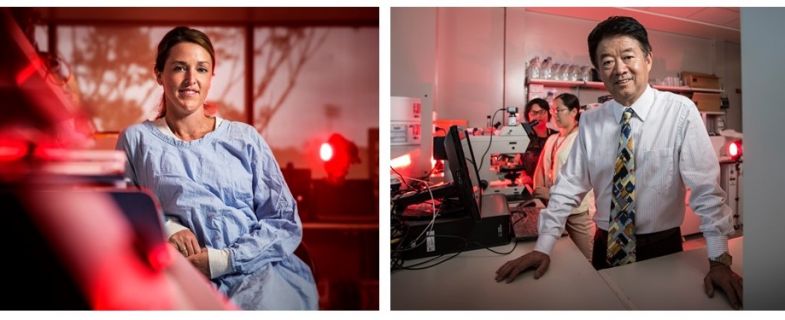
Adding to that field of research is a project about to start at the Illawarra Health and Medical Research Institute at the University of Wollongong, headed by Dr Katrina Green and Professor Xu-Feng Huang, as well psychiatric Professor Nagesh Pai and psychologist Dr Jason Cusack.

The pilot project will study about 30 patients with schizophrenia to investigate the link between bacteria in our gut and brain functioning to identify new ways to improve cognitive function.

University of Wollongong
Source: University of Wollongong (from left)  1. Dr Katrina Green    2. Professor Xu-Feng Huang


“I find it fascinating that we get these gut feelings,” Dr Green says.

“When a person has a psychotic episode it’s in your face, so that’s what gets treated. The cognitive deficit that comes along with schizophrenia is in the background. 
 

Memory and learning loss

“Research is showing that cognitive deficit – problems with memory and learning – occurs in a lot of people before the first signs of the illness appear.

“I often hear that people’s sons or daughters are performing well at school, and then they go into a decline. By the time they are 19 or 20, they end up with psychosis.”

The project will not only look at ways of improving the brain functioning of those with schizophrenia, but also has the potential of providing early diagnosis for the disease.

The hypothesis of the study is that gut microbes are a key factor in the psychological changes in the brain.

The method will be to examine the gut microbes in the stool samples of patients, both when they are exhibiting symptoms of psychosis, and when they are not.

“Cognition is often not tested by clinicians and is not addressed by current anti-psychotic medications,” Dr Green says. 

Neuro-transmitters in the gut

These gut bacteria produce the same neuro-transmitters that regulate emotion and mental health in the brain – dopamine, serotonin, glutamate, norephinephrine.

“If we can find out what’s dysfunctional, then we can figure out how to fix it. The aim is to try and improve the functioning of people with schizophrenia and restore normality to their lives.”

Clinical psychologist Dr Jason Cusack is the researcher in charge with testing the cognition of the patients in the study.

As part of the Illawarra Brain Injury Service, he is experienced at administering tests to measure impairment of brain function, whether that’s from trauma or psychosis.

“The very interesting thing with schizophrenia and cognition is that it’s becoming more recognised as a core effect,” he says.

“Traditionally, the disease has been seen in terms of psychosis and hallucination, as well as the social factor of withdrawal. We have these negative symptoms of apathy, as well as the positive symptoms of psychosis.” 

University of Wollongong
Source: University of Wollongong (from left)  3. Dr Jason Cusack 4. Professor Nagesh Pai

Cognition is key

More recently, research and the most recent Diagnostic and Statistical Manual of Mental Disorders, published by the American Psychiatric Association, incorporates cognition as one of the key factors in schizophrenia.

Symptoms can include changes in memory and learning, perception and speech, distraction, inability to focus, depression, anxiety and a reduction in self-care.

For Professor Nagesh Pai, the research into the gut and its connection with mental health started in 2009; when he began researching why anti-psychotic drugs often caused weight-gain in patients.

Currently research is investigating a medication derived from lizard salvia; this medication is used   to counter the symptoms of diabetes. This medication has shown promise in mice with both weight loss and improvements in cognition; planning is under way for human trials. 
 

Huge effect on mental health

“We also know that patients with schizophrenia have two to three times the risk of developing diabetes, compared to the general population,” Dr Pai says.

“We are trying to find out the part that genetic factors play in this, as well as social or environmental factors. The aetiology of schizophrenia is multifactorial and while the role of genetic factors are well established further work is needed investigating the role of environmental and social factors in controlling diabetes in this population.

The UOW research team believe that altered gut microbes effect the neuronal functioning of the brain.

There is a lot of evidence that there is a bi-directional communication between the brain and the gut and that both influence the functioning of each other.

“If we are able to establish this, a new direction may be provided for the management of schizophrenia.”

 
Story By: William Verity 


Science Says Sleeping in a Really Dark Room Will Make You Smarter

  Science Says Sleeping in a Really Dark Room Will Make You Smarter The darker the room tonight, the smarter and more alert you’ll be tomorr...

Popular Posts